Decentralized by Default: The Internet’s Comeback Story
We sprinted into cloud lock-in; now we’re waking up to vanished links, throttled reach, and brittle outages. Ownership is the only upgrade.
We sprinted into cloud lock-in; now we’re waking up to vanished links, throttled reach, and brittle outages. Ownership is the only upgrade.
Introducing an unstoppable partnership between Storacha & Presearch.

The modern internet has become synonymous with a few companies.
A few who decide what we discover. A few who control where we store data. A few holding the keys to how most people access and cultivate knowledge online.
This dominance has gone largely unquestioned for decades, and the status quo has come at the cost of privacy, control, and independence.
The antidote is to intentionally rebuild the tools that have become integral to the human experience online.
Storage should not be locked in proprietary silos. It should be distributed across verifiable, community-powered networks.
Search should not be controlled by one company. It should be operated by thousands of independent participants.
Those rebuilding with purpose share the same goal: putting people first. This is where projects like Storacha and Presearch are aligning their efforts to make that future a reality even faster.
Presearch is a search engine that enables people to access information without profiling, filtering, or surveillance.
You can search without having your habits manipulated for ad dollars, all through the power of a decentralized infrastructure.
Storacha decentralizes storage giving true data ownership while ensuring that once data is created, it remains fast, verifiable, and accessible without relying on a single provider.
Together, decentralized search and storage form the backbone of a free internet.
Why Is Centralization a Problem?
Centralization means essential online services are in the hands of a single company or a very small group.
When you search on Google, one corporation’s algorithm chooses which results appear first.
When you store files in iCloud, one company controls the servers, the rules, and even whether you keep access.
It leaves billions of people dependent on a few gatekeepers.
Leading to four reasons why centralization is a problem:
1. Censorship and Suppression
Content can be buried, deprioritized, or removed with little transparency. Expanded information, independent journalism, and non-mainstream topics are often pushed out of sight.
2. Surveillance Capitalism
Every search, click, and upload becomes a data point sold to advertisers and used to refine a profile of your behavior.
3. Fragility
When major cloud services go down, a majority of the internet shuts down. One decision or mistake by a centralized provider can erase entire communities.
4. Bias
Algorithms optimized for advertising and engagement skew the information landscape. The results you see are what is most profitable, not what is most accurate or useful.
Decentralizing essential tools on the web reverses this imbalance that has gone on long enough.
Power is distributed across networks of people all across the globe, removing single points of failure or manipulation.
Communities of people are the core of the infrastructure and principles of a shifted system.
The shift has already happened through projects like these that enhance the pillars of the internet: how we find information and how we store it.
Presearch: Decentralized Search Engine
Search is how most of the internet is navigated. It’s how we find information, evaluate opinions, and accumulate knowledge.
Today, that key navigation tool is owned by a few corporate entities fueled by surveillance and advertising
Presearch is the alternative search engine for people who don’t want their data in the hands of companies who will sell it to the highest bidder.
Searches are routed through a network of computers, owned by people just like you, which removes the link between the user and the query.
Presearch does not track user activity or build behavior profiles. Search results are not tied to your identity or location.
This means that your results are not filtered, and you break out of the echo chamber to discover more with less corporate limitations.

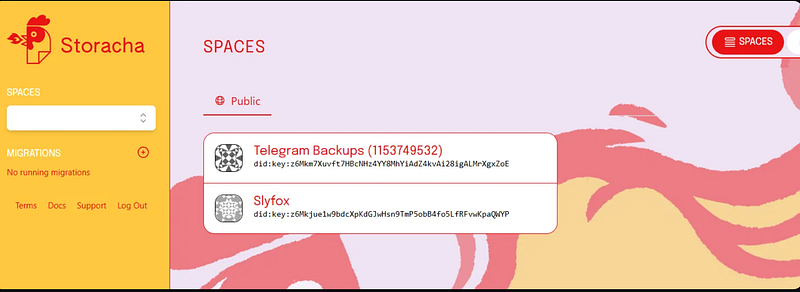
Storacha: Decentralized Storage
If search is how we find information, decentralized storage ensures it remains accessible.
Storacha is a next-generation hot storage network built on IPFS and Filecoin, designed for fast, verifiable data retrieval.
Decentralized nodes keep frequently used data fast, and every file is cryptographically provable, so you know it’s your authentic, non-tampered data.
You don’t have to trust a single company, the trust is mathematically written in code.
Ownership and permission is kept in your hands, not a corporation’s, through UCANs, or User Controlled Authorization Networks.
Through speed, transparency, and sovereignty, Storacha provides a decentralized alternative to the corporate chokehold on your files.
How Search and Storage Work Together
Search without storage is fragile. Storage without search is invisible. Together, decentralized search and decentralized storage create a complete ecosystem for knowledge.
Presearch makes sure information can be found and helps you uncover suppressed content, all while maintaining your privacy.
Storacha makes sure that information endures while you have ownership.
This pairing matters because the problems of centralization are not isolated. They reinforce each other.
When storage is centralized, content can be deleted. When search is centralized, even surviving content can be buried.
Only by addressing both can we build an internet that is resilient, fair, and open.
Why This Matters Now
The urgency of decentralization has grown in recent years. AI systems increasingly determine what we read, watch, and believe.
They inherit the same biases that legacy information systems have been plagued with. Governments are pressuring platforms to police content more aggressively.
Outages at major cloud providers highlight the fragility of depending on a few data centers.
If we continue to rely on centralized search and storage, these trends will only intensify. AI models will be trained on biased data.
Content will disappear without recourse. And the boundaries of discovery will be set not by what exists, but by what corporations allow.
Decentralization offers a way out. It ensures that discovery remains open and that knowledge remains permanent.
It restores agency to users and communities. It builds resilience into the very fabric of the web.
The internet’s future will not be secured by accepting the status quo. It requires a foundation that prioritizes privacy, permanence, and independence.
Decentralized search engines like Presearch and decentralized storage networks like Storacha represent two critical steps toward that foundation.
The choices we make today about how we search, store, and share information will shape not just the future of the internet, but the future of knowledge itself.
Choose the Internet That Serves You
When you choose decentralized tools, you’re saying the web should serve people and communities, not gatekeepers.
Start here:
- Search privately: presearch.com
- Store it fast & verifiably: storacha.network
- Learn more: Presearch: presearch.com/learn-more · Storacha Blog: storacha.network/blog
About Storacha
Storacha is building the foundation for a decentralized internet based on verifiable, self-sovereign data. Backed by a $6.5M Seed round led by Protocol Labs Venture Studio, Storacha enables portable, programmable private data at scale through DIDs and UCANs — a breakthrough in decentralized access control. Its infrastructure powers entirely new possibilities: from AI agents securely sharing data, to games and dApps exchanging off-chain assets without relying on servers or middlemen. Storacha’s vision is simple: your house, your key.